Sunday, January 28, 2007

Aikido3D

Downloaded this bad boy today.
http://www.aikido3d.com/

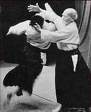
You can see from the link it is a pretty revolutionary. It reminds me of the early version of Sega VirtuaFighter. Basically employs the same technology of motion capture on Uke and Shite and goes through 100 or so of the most common attackswith some search functionality as well.

Have been playing with this and although it is Aikikai and not Yoshinkan, it is still a very interesting product with temendous potential. I would like to see this applied to a lot of other products as well, especially ground work (like the Mark Hatmaker series on submission wrestling or boxing) and of course it would be good for things like dance lessons and the like.
Lots of ways I can think to use this as a training tool.

A lot of subtle parts of the macro movements, balance, and the like that you can pick up from this product.

Osu!

John

Friday, January 19, 2007

Lists


Just finished reading Schindler's List by Thomas Keneally.

http://www.amazon.com/Schindlers-Penguin-Joint-Venture-Readers/dp/0582788943/sr=1-4/qid=1169180813/ref=sr_1_4/105-0820460-9666821?ie=UTF8&s=books

For those of you who have not read the book or seen the compelling movie http://www.imdb.com/title/tt0108052/ it is the story of Oskar Schindler, a Sudeten German who ended up risking his life being the savior of more than 1,000 Jewish people in Poland and Czecheslovakia during World War 2. It is an emotional story about emotional times, which also shows that even in the darkest hours, human spirit endures. If one did not know it were true, it would be unbelievable.

We Honeymans are originally Russian jews from Tirov, near Minsk in Russia. Grandpa Jack came to New York via Ellis Island just after the Bolshevik revolution, but the branch of the family that remained in Russia all died during the war. There was no Oskar Schindler to save them.

Although genocides are not uncommon in human history (some having been done by British and Americans themselves), the films taken at Auschwitz and other concentration camps were the first time such events were captured on film and photo and widely publicized. It is shocking to me that despite this, human beings have learned so little. Since Hitler and the genocide against jews in Europe, there have been a number of similar atrocities. Among them Stalin's genocide of his own people in Russia, Pol Pot's massacre of his own people in Cambodia, Pinochet's torture and murder in Chile, ethnic cleansing in Bosnia, tribal conflict in Africa, Russian mass murder of Afganis during their campaign there (not to mention the oppressive Taliban regime), Saddam Hussein's recent murder of rival factions in Iraq, and the list goes on and on. When will people EVER learn?

Yet another astounding thing about this story is that the perpetrators of the Jewish genocide were mainly Protestant Christians (Lutherans). Of course, religious persecution is one of the oldest justifications for genocide, but all Christians must be aware of the very simple ten commandments given by God. "Thou Shalt Not Kill". This does not include any exemptions or exclusions. It is a pretty simple four-word order that should leave no room for interpretation in the minds of any reader and believer. Still it seems not to be enough.

It got me thinking about lists, since that list literally meant the difference between life and death. There are good and bad lists all around us, and keepers of lists as well. What lists do you control? And who is affected by them? Are you righteous and just? Are the people on the list "people" to you? Or have they been dehumanized into names? or even worse, numbers?

All around me I see lists. Lists for who gets promoted, lists for who gets into private school, lists for who gets vital information, etcetera. email lists, action item lists, song playlists, honor rolls, detention lists, wish lists...

There is a terrifying reality that our lives are determined, sometimes forever, by the lists we are on. There is a real practical value in learning the skill of getting on and off of lists.

I pray that I would have the courage to help other people when faced with "the impossibility of reason"...Yoshinkan training is supposed to bring everyone closer and closer, until there is only One list with EVERYONE'S name on it...May God bless us all.

"he who saves a single life, saves the world entire"

Wednesday, January 10, 2007

Takeno-Sensei

Wow! Takeno-sensei!
http://www.youtube.com/watch?v=LYmoSu46Ar4

He truly has it all...everything that Yoshinkan should be.
Dynamic, precise, graceful, harmonic -> POWERFUL

All the masters I have seen have elements that fascinate. Still, every time I watch him it takes my breath away. We all manifest aikido in accord with our own nature, and it is very hard to describe the end goal in words. His aikido is the closest example I can give to what I am looking for. To everyone who thinks aikido doesn't work: go ahead and grab this guy!! (you can give me your opinion of what happened when you regain conciousness)

One thing that should be evident to even a casual observer is how his WHOLE BODY is involved in every technique. Takeno-sensei is not a giant, but his aikido is like a mountain. I think this is one of the keys.

Osu!

John

Tuesday, January 09, 2007

New Year's Resolutions

well...it's a new year. That has some good news and some bad news.
The good news is that not only did I not forget my techniques over the three week break I had, it basically feels like I never stopped. This must mean that even if my concious mind forgets, my body remembers. That's good.

The bad is that I was not able to test for 1-kyu in December as planned, and I find myself feeling increasingly depressed by that. Of course, in the grand scheme of things it doesn't really matter, but somehow it has been hard for me to let go. I am good enough to have passed, but somehow in the midst of everything going on in Dec, it just wasn't meant to be. I guess it will be easier in March when I take the test, but I wish I had already done it, that's all.

I will have to learn to let go of this attachment or it will poison my current traning. I must focus on just being and giving 100% every time I am on the mat, and the rest will happen in the natural order of things.

See you tomorrow.

Osu!

Monday, December 25, 2006

Another Year in the Bag

That's it - training finished for 2006...how was it for you? I hope you worked hard, had fun, and learned a lot along the way.

What am I wishing for in 2007??
  • have more training time
  • do less business travel
  • listen more
  • be more patient
  • participate more
I want my aikido to show in every moment of every day, like a magic I have; A magic that others will wish they did, too. At the heart of what we do is fellowship and community, not just with each other in Yoshinkan, but with all the people in the world who are training hard every day to give their life structure and discipline, and who use this opportunity to become better people.

My heartfelt thanks to everyone whose support helps give me courage to continue.

Warm Wishes and Happy Holidays!!

Osu! John

Monday, December 04, 2006

Having a "Near-Life" Experience

During the busy nights of drinking last week an interesting conversation happened that I want to share with you...my co-worker, Jae, is a devout Christian. He was raised Christian, and later began to practice voluntarily (not just out of habit). Because he is a practical, smart, single young man in a business of high stress and pressure (PT sales), he is a great mirror through which I try to understand how devout Christians apply their religion to their complex daily lives.

Over many sessions, he and I have discussed the difference between his religion (Christianity) and mine (martial arts). We did so again last Thursday. He related a story to me of his business trip to the US in September, and of nearly having a plane crash on a flight from Chicago to San Francisco. All around him, people were screaming, franctically trying to make cell phone calls, and basically in a chaotic panic. Eeven seasoned flight attendants broke down hysterially. As far as they could tell, it was their last few moments of life. What would YOU do?? Jae told me that he closed his eyes and realized he was helpless, realized he loved Jesus Christ, and that he would go to heaven. He was no longer afraid. he asked me if martial arts would give me the same comfort and piece of mind. He called it a "near death" experience. I call it a "near-life" experience. These are the times that help us break through to the other side of our conciousness and really truly begin to understand ourselves and our lives.

I have not been near death in a long time (last time I was 21 years old). At that time, it would have been hard to say I felt anything but anger. Not fear, anger. That was a long time ago, and now I am married with a family of my own. What would I feel this time?

I contend that our study of The Way is designed to give us courage in the face of hardship, including death. Many take the words of books like Hagakure "The Way of the samurai lies in Death" to mean that one must not embrace life and long for death in every waking moment. Wrong. In fact, study of death through martials arts should yield an appreciation of our own frailty and mortality; and at the same time, our ability to overcome these limitations and be so much more. We must discover the joy of every day, knowing that each morning could be our last. This means leaving nothing unsaid, living each moment as fully as we can, so that even until the last breath, we have been fulfilled and are thus satisfied and ready to let go.

This makes me especially sad when I see people like Seagal-sensei, who has trained for so many years and still knows only anger. Or my wife's yoga teacher, who has trained his whole life and does not know peace. If so, did they both waste their time?

I hope that my last lesson to my boys will be the lesson of how to let go with courage and dignity. Until then, they and the others close to me will know that I love them, because I will tell them and show them often. I will live my life 100% without regret.

On the mats as well, I will give 100% so that I get 100%.

And if today is my last day, so be it.
If it is not, see you on the mats tomorrow.

Osu!

Have you had a "near-life experience"? What was it??

Wednesday, November 15, 2006

The "Eyes" have it


Another important idea today...where are you looking??

In addition to all the other things that make our techniques work, the eyes are a vital component to putting it all together.

On a metaphysical level, our eyes/gaze , called metsuke in Japanese, are part of the way that we focus our energy and attention on the matter at hand. They should give uke pause, and show that shite is tuned into the moment. Some say you should focus on a point just at the top of uke's sternum, meaning not to look uke directly in their eyes, but it is a very subtle point.

At the practical level, we tend to move our head where our eyes are looking. If we look away, our head can turn, taking our strength and balance with it. Yet another reason why it is important to keep our eyes squarely on our opponent(s).

I would suggest putting your gaze in a central location on or about the chest of your opponent, with head slightly tilted to allow for better peripheral vision. In any case, it is important that your head/spine not be turned and be straight just as your back should be straight.

"see" what I mean?

Osu!

Sunday, October 22, 2006

Might versus Right


I know what you're thinking..."why isn't it working??" It happens to all of us. It happens for a long time. It's frustrating as hell. That feeling when you apply a technique and uke just stands there with a blank, bored expression. NOTHING HAPPENS. We've all been there. So, what do you do??

For most of us, you gun it. You apply more strength to try and muscle the person into the technique, as if you would smack the round peg with a hammer to get it through the square hole. Hmmm...I admit it is very gratifying to see uke respond in the technique the way you think it should work. However, as Saori says "aikido is for everyone, but everyone is not for aikido". The truth is that application of a lot of muscle power is counter-intuitive to the proper application of aikido techniques. In aikido, uke is the one that should be doing the hard work. Shite should be relying on timing, position, movement, atemi, and the rotation of the hips as the primary means of getting uke off balance and keeping uke off balance until the dynamic result (projection or control) inevitably occurs. Of course, when done from a static position as kihon waza, it's really hard to get that all the time and get that response from every uke.

However, let's look at it from uke's point of view as well. As uke, should you just "go with it" so that you are faking a result? Yes...and no. Yes in that as uke you want to experience the projections and controls to understand them, and you want to give shite a chance to feel the dynamic feeling of applying them. At the same time, wrong is wrong, and it does not help shite to go with it if the basic principes (as I described above) are lacking. A fine line indeed.

Here's my advice.

1) focus on the basics - timing, position, movement, atemi, and the rotation of the hips

2) remember as uke that the dojo is a place of learning

Uke's primary goal in the dojo is giving. That means giving of time, energy, and body to help shite master the principles by applying technicques over and over. That's also why we bow to each other and why we change places frequently. We respect and appreciate uke's sacrifice, and we want to share all facets of the experience.

I think it is best not to worry so much about whether or not each kihon waza really "works". It is more important to try and remember the learning point of each technique and drill it with the intent of mastering the application of the key components of every techniquen namely, timing, position, movement, atemi, and the rotation of the hips. In time, all techniques are one, and they will all have the right result.

I know it is tough. Lest we forget, Patience is another element we must practice in the dojo.

Wednesday, September 20, 2006

One Little Word

Sometimes that makes all the difference. Today we worked on ushiro ryote mochi sankajo osae 1 & 2. Technically, we were able to get it fairly accurate. However, I was aware after the lesson that I spent most of the time doing the technique TO Saori and David, rather than WITH Saori and David.

Of course I know that Aikido's "ai" means harmony and refers to the dynamic union of shite and uke at that brief moment in time when they are together in a single motion. Easier said than done.

To me, that is the next level of improvement in my training...to respond to the feedback from uke dynamically, and make the technique a single fluid motion between us. That will take the rest of my life to achieve, but well worth it. Work on this concept more in class tomorrow.

Osu!

John

Vital Signs

vi‧tal  /[vahyt-l] –adjective
1. of or pertaining to life
2. having remarkable energy, liveliness, or force of personality
3. necessary to life
4. necessary to the existence, continuance, or well-being of something
5. of critical importance
6. indispensible


Vital. I like that word, and have been thinking about it all morning. That is how I want my training to be. Vital. Having remarkable energy. Necessary to my well-being. indispensible.

Like many things in our lives, when they are neglected or taken for granted, they diminish.
I often worry that my training will lose focus and intensity, especially when I am travelling so much and burdened with so many other things. It is especially important for me to make my time on the mats counts, and to never become complacent with my current level.

I continue to believe that who I am in the dojo is who I am out of the dojo (at least who I want to be). Vibrant. Participating. Supportive. Obsessed with excellence.

I hope you, too, can keep your energy level high when we train, and be sure to be in the lesson 100% every moment we are there together. Be Vital.

Osu!

John

Tuesday, September 05, 2006

"whenever I move, that is aikido"

Excellent quote from O-Sensei, and worthy of a lot of consideration.

I saw it here on a you tube site which looks like Aikikai guys from Sweden or Finland (http://www.youtube.com/watch?v=OYRrlKgRNQ4). A very cool clip of some very cool guys. I also like this clip from Master Tony Yates (http://www.youtube.com/watch?v=aicHsMC6rxM)

I escpecially note his crisp footwork and very strong atemi, which rocks uke back onto his heels. To me, both of these are great examples of final product after years of work, where the motions are strong and balanced, and there is a dynamic contact between shite and uke.

I get excited whenever I see people that good. I want to be that good. You probably do too.
"Whenever I move, that is aikido"...someday...

Osu!

John

Wednesday, August 23, 2006

Softly softly

Just noticed this morning how soft my uniform had become...I bought it on eBay some time ago, and it arrived crisp enough to stand on its own. It actually hurt to wear it for awhile. Now it is as soft as a flannel blanket, which is somehow comforting.

When I started in Yoshinkan I was the same way. Every motion was all muscle power and force against force, which from my prior training I thought was the right way. Now, the trick is how to get the most result out of the least effort. To use the hips rather than the arms and chest, to be subtle and, for lack of a better term, "soft". At this point Yoshinkan becomes very efficient.

One of the most wonderful things about Yoshinkan is the subtle nature of the techniques, and the blend of linear and circular shapes. Unlike purely linear styles like Wing Chun, Yoshinkan allows for circles and spirals of all shapes and sizes as a way of redirecting motion and capturing uke from the most advantageous angle. Each movement should set up the next, in an inevitable dance that leads uke's attempt to rebalance into an osae or nage.

The discovery here never seems to end, as each technique challenges us to explore how the human body affects balance and strength, and how to remove them with the minimal amount of effort. Still so much to learn, and truly fascinating stuff.

Osu!

Tuesday, August 22, 2006

Cause and Effect

Today we spent the whole lesson practicing and discussing how to make an effect happen on uke. Specifically, it was the effect of their balance falling into position so that your own body shift can be at the right place at the right time. It all hinged on being able to move their arm to a certain position, behind which their balance was dependent. It got me thinking, though.

If we observe carefully, we can start to see the ways in which our actions impact the lives of other people. Sometimes willfully, sometimes unintentionally, but ALWAYS. I find it amazing that our second son is so quiet and calm compared to our first. maybe it is just because he is different. But maybe it is also because WE are different.

Take a look around you. See all the people you interact with on a daily basis. All of their lives can be dynamically changed by being in contact with you - just as uke is changed by being in contact with you. The power in this is impossible to deny.

Osu!

Tuesday, July 11, 2006

The Fork in The Road


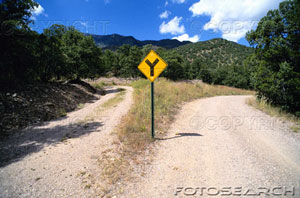
We have all faced it, and we will all face it again. The fork in the road between right action and easy action. This can take many forms. Sometimes it means the difference in doing something just for one's own selfish desires, and doing for the greater good. Sometimes it is simple difference between right and wrong, made worse by the delusion that we can do wrong and "not get caught".

Make no mistake, we are in combat every day. This combat is a "combat of the soul" and our victory is the victory of our good human nature over the evil that men do. We live in a world of temptation.

I want very much to believe that martial arts training prepares us to win these battles, the little battles inside us every day that cause us to give in to temptation, or help us to stand strong against it. The temptation to sleep in late and be lazy can be overcome, as we have found from our years of training together at 5:45 AM. So too, can other temptations be overcome, and allow us to choose long-term benefit over short-term satisfaction. We win a little bit every day.

Of all the challenges we face in our lives, the challenge to choose right action in the right moment without hesitation is to me the central goal of my life on this earth. I know my training will give me the courage to win this battle again and again.

What will you do next time you stand at the fork in the road? Will you be proud of the choice you make? Will your training give you the strength to do what is right?

I wish you the same victory I wish for myself.

Osu!!

John

Get a Grip

Good lesson today training in suwariwaza/tachiwaza sankajo from katatemochi and shomen uchi. On important thing in Yoshinkan that I often neglect is the need to grip uke's arm. Not sure if it's because I am trying too hard to flow, or just afraid to grab the arm. However, it is an integral part of several of the key controls in Yoshinkan that you actually GRAB uke's arm (usually elbow) and rotate it as part of the process of taking uke's elbow/shoulder and breaking the balance. The kihon shomen uchi responses for ikkajo, nikajo, sankajo, and yonkajo (ichi variations primarily) are prime examples since they depend on this rotation to unbalance uke and begin the dynamic motion of the technique. Without gripping and rotating, the technique feels weak and often fails to control uke effectively.

It is important to remember to get a grip.

Osu!

John

Wednesday, May 31, 2006

It Is What It Is

The other day I heard from my college friend Rob. What a great surprise. I remember the first day that I joined the fencing class at College of DuPage, and we became instant friends. That led to a wonderful time in my life from 87-90 or so, with a lot of discussions about everything and the occasional spontaneous camping trip thrown in for good measure. He asked me, "what is Ki?" Yikes. After being involved in the martial arts in one way or another for almost all of my life (all of it that meant anything, anyway), had I found the answer yet? At the same time, the answer to this elusive goal is something that most of us have in the back of our mind all along this journey, and the answer changes as we change. As well, this question speaks to the nature of we martial artists as spiritual beings, and underpins the close relationship to Buddhism and Shinto in our training. Hollywood movies attempt to make a lot out of this, whether it is the insidious Star Wars saga with its "May the Force be with You" or the Karate Kid series "wax on, wax off". For a preface, I would say that any traditional zen master confronted with such a question would be likely to give the student a whack with the kyosaku (the "stick of awakening" used during zazen training) not just because even they might not know the answer, but also since the question is even more important than the answer, and trying to put it into words could not do it justice. However, here's my personal view. You need not agree with it or believe it. Even I may not believe it next time I read this. KI refers to several things. Here I want to look at two broad topics: 1) the force of life 2) faith or conviction An example of the first of the above two points: I am amazed at the grip my newborn second son Ray has, even though he is only 10 days old. He cries with a singular sense of purpose, much more loudly than I could if I were his size, and it is pure and without prejudice. Life wants only to live, and this driving force is KI. It is what causes fish to swim upstream, birds to migrate thousands of miles, and trees to grow in even the most hostile of conditions. It is at once a beautiful and desperate thing, and involves the instinctive hope of any living thing to survive and prosper. What we feel here is the most primal of all our basic natures, and animals are great examples of KI. It is for this purpose that man-made things do not have KI. Quite simply, there is no life force in things which were never alive (although I must confess I like the romantic idea of Japanese swords and other ancient things having KI). We are also made acutely aware of this force when people die. It is as if the light leaves their body and what has held their molecules in the same place for so long just lets go and then the light goes out. We are all born with KI, which is in us until we die. This is our common starting point and our connection to the natural world around us. A deep awareness of this through meditation can help develop our "connected feeling" (the AI in Aikido) but everyone has KI regardless of whether they know/acknowledge it or not. Considering our KI as our "soul" gives a Christian connotation which is not really appropriate, and also hints at Buddhist discussion about such things as whether animals have souls/Buddha natures, which is more academic than is necessary here, it is enough to say that since they are alive they have KI. An example of the second part is during certain classes when I finally stop thinking and analyzing and just let my body move as it has been taught. This purity in motion, rare as it is for me, is when I let my faith in my techniques, my training, and myself take over. This is really where we have an opportunity to develop KI. When we extend our KI in class, or in our life, what we are doing is extending our faith and conviction in the moment at hand. This is faith and conviction in ourselves, in our cause, and in our technique. We TRUST. That is also KI. We let go and allow what is to be, to be. Our training should help us to have this happen more and more often, until it becomes our natural state of being. That is, always letting go, and allowing ourselves to be connected to the natural world around us and, more importantly, not resisting that connection but instead rejoicing in it. I have mentioned in other posts about "right action in the right moment without hesitation", and I believe this is a central concept to KI development, and the instinctive, decisive action it helps develop deepens our connection to our life force (as above). Humans are unique among the Earth's creatures in that we are self-aware (and may be the only living things on Earth that are so). This means that we can be conscious of these things, and can actively seek to deepen our connection. So saying, we can develop our KI, at least inasmuch as we can make better use of the Ki we have been given. Rob mentioned to me that he is "in tune with his body", to which I would say that strength of the body is surely important, but even more important is to be in tune with the world around us, since that is a power greater than our own. I am setting the stage for a larger post about martial arts and religion which I owe this blog, but for now I want to get this out as a starting point. I want to know what YOU think. Maybe we can find the answer together. OSU! John

Monday, May 08, 2006

"You will Want That Time Back Someday"

I suppose each of us has his or her own reasons for starting the long road of training in the Martial Arts. The great part is that over time, we realize benefits we did not foresee. In my case, self defense was the initial motivator, but I quickly found the spiritual side of the training to be a good guide for the rest of my life as well.

In my early teens, for some reason, I become obsessed with my own mortality, and wanted to overcome my fear of death, to be able to have "right action in the right moment without hesistation" which can only come from living without fear. Over time I learned that this is much more about not being afraid of Life than it is about not being afraid of Death. By this, I mean not being afraid to take chances and reach for your dreams; not being afraid of failing as often as it takes to reach your goals.

After several years of training, and some of my own close brushes with death, I was convinced that I had overcome such fears and was free to act. That is, I was no longer afraid of dying. The truth is, though, that at that age (20 or so), I had nothing to lose that I put a high value on. The rest of my life had yet to unfold. With nothing to lose, throwing away one's life no longer seems like such a noble gesture. Rather, it was just the angst and wasteful stupidity of youth.

Now, at nearly 40, my life has become rich beyond my wildest expectations. I have a wonderful family, many friends, and a challenging job. I have been able to take part in the happiness and success of those around me, and actually play a vital part in their lives, which is what I really wanted. Am I still unafraid to die? Could I let go if I had to??

I have to say YES, if I had to, I believe I could still give up my life (of course, one never knows until that exact moment). The very fact that I can say YES now is much more important now than it was when I believed it at 20. I have so much to lose now, and so much to let go of in such a case. The only things I will have are the belief that I have lived my life well and fully, without regret, and the desire to leave one final legacy for those I have known, which is the lesson on how to die with dignity when the time comes.

When I think of the heroes on United 93 (now a movie), I imagine what a man thinks about before he puts his life on the line. How does he decide to let go? What message does he send to those he leaves behind? Can he really have dignity in those last final moments? Those brave people defined the word HERO for me, and many of them had to let go of an awful lot to be free to have right action in the right moment without hesitation.

That brings me to the point of this post. All of us will end up wishing we have more time. We don't. That moment will come when it comes, and training in the Martial Arts is not about making us want to throw our lives away at the earliest opportunity. Rather, it is about experiencing a richness of life so great that we use our lives to the best possible result, and be willing to accept that finality when the time comes (and it will for us all) and face it with dignity and without regret.

I have seen lots of people engage in self-destructive behaviors of a wide variety (and have been guilty of many myself). Now that my life is good, I would like those extra minutes/days/weeks I wasted back. I can't have them. They are gone. I have only now, and the unknown future ahead of me, to do the best I can until the inevitable happens.

My advice here is simple: when you smoke that cigarette, slam that shot, or use drugs (and the list of self-destructive behaviors is longer than I can list here) just remember...YOU WILL WANT THAT TIME BACK SOMEDAY...unfortunately, you can't have it again. It's gone.

Make today count. Please.

Osu!
Tuesday, May 02, 2006

How to Build a Technique

Here's a little metaphor I often consider...

We can consider techniques on many, many levels (the actual definition of "technique" is hard to make precise). One way that makes sense to me is to liken building my technique to building a house or other building.

The very first place is the foundation. Without a strong foundation, even house will fall in the slightest bad weather. This means that we train the kihon dosa until our legs and hips are strong, and out stance solid. This dachi is the foundation for all technique and under any circumstances, your feet should always return to kamae in order to maintain balance.

Usually, we find that when doing Jiyuwaza, once we start to lose the proper footwork of 180 degree turns and irimi of the hips, the rest of the techniques collapse. We begin to tilt or lean forward, and lose all the power. The loss of shisei is a direct result of the loss of dachi and no technique can manifest when that happens.

So it is important to consider how to make that foundation strong, and to always spend time in practice on the kihon dosa to give muscle memory to the movement of the feet and hips. Once this happens strongly and without the body rising up (actually the feeling should be one of sinking, not rising or floating) then we can begin to let the techniques manifest more fully and we will not get tired or lose kamae so easily.

Later, with a strong foundation, we can build a house of any size or shape. In particular, we can think of "zoning", a concept often used in JKD training, to divide angles of attack into different zones or quadrants. Western fencing also does this (and may be where Bruce Lee got it). Responding to zones is a lot easier than responding to specific attacks. We can also consider movement inside/outside of uke, high/medium/low zones for response, and other tactical elements, none of which work if the foundation of mobility is not strong.

Every martial art fundamentally needs the foundation of mobility in order to be effective, and Yoshinkan is no different. Please take time to work on this. It makes a big, big difference.

Osu!

Tuesday, April 25, 2006

Playing Like a Champion

Lots of little boys dream of being professional athletes.
Where I grew up, Chicago, we often dreamed of being baseball players,
just not with the hapless Chicago Cubs.

For me, though, the thought of being a professional athlete was often really scary.
I could not imagine standing in front of all those thousands of people and having to perform under that pressure. Even though as a professional speaker, I have done large presentations before (300 - 400 people) I still get the "butterflies". This is NOTHING compared to the feeling of having to sink the tournament winning putt, or score the overtime goal shot to win the Cup.
The pressure must be unbelievable. I have huge respect for those that can bear it.

The worst for me was to watch a batter fall into a slump. That's when you could really see their true character. You knew they didn't know why, but somehow ball and batt wouldn't meet. The last place they probably wanted to be was in the batter's box lining up, but they also know in their hearts that the batter's box was the only place their problem would ever really get solved.

The dojo can be a lot like this. The path is long, and has peaks and valleys. Sometimes we don't know why, and the blind faith in the training is all we have to guide us. Of course, the dojo is the only place these problems can be solved, too. We must keep the courage to continue training and trust that it will all become right over time. Our doubts will be replaced with the quiet confidence of achievement, and knowing, really knowing, that we CAN.

At the best of times, we students support each other and provide companionship along the path.
But never forget, that the answers can only come from your own training. Every part of you, mind, body, and spirit, has to come to an understanding; a Knowing. That can only happen with practice. Words alone will not suffice.

Hang in There. Before you know it you will be hitting home runs again.

Osu!

"No Mind", not Mindless

Trying to keep an open mind is never easy. It is especially not easy when you are in the dojo. For me, it can be a place of refuge when the rest of my life is out of control; my little laboratory where I can test out what I want to improve in my life. Of course, it is never easy.

We often talk about "no mind" in zen practice. In fact, it even gets hacked up in bubble gum budo movies like "The Last Samurai". The reality is that learning to free our minds is about learning to let go...and this takes practice and repetition to achieve.

My original Zazen teacher used to say that doing zazen was anything but peaceful. He would say that if you do zazen correctly, you sweat from the mental exertion of trying so hard to let go and be "empty". He would say that the kyosaku (the stick used by the teacher to hit people doing zazen) was not just to wake you up and help you focus, but to remind you that the concious effort of trying to let go of distracting thoughts is a fight.

Many times I go into the dojo and get onto the mat trying hard not to think about what we are doing. Trying to let my body just DO what it knows how to do. Some days you get a glimpse of the Truth of Aikido, which is Freedom in Motion. Sometimes, you just suck. Today was the latter. "No Mind" was just "mindless". A total lack of focus. No kime. No zanshin.

Today I was disappointed. I could feel sensei wanting to take the training up a notch. I could feel the intensity, and it is almost a tangible thing. Your partner wants you to push them harder; they want to push you harder. Both of you are trying to get closer to the Truth. But I couldn't hold on. The distractions came and I could not be "in the moment". I could not let go. I just haven't been training enough lately and I disappointed my partner. That disappoints me.

Part of understading the "harmony" of Aiki is the fact that you and your partner are in a constant struggle to discover the Truth about who you are, especially in relation to each other, and in relation to the rest of the people in your lives. Our crucible, the dojo, magnifies our fear, our doubt, our anger, our frustration. It also magnifies our courage, our mercy, and our grace.

I am always sad when I miss a chance to find the magic - the connection to the training partner that brings both people closer to the Truth.

I will be ready next time. I won't let you down. We will find it toegether.