Sunday, February 25, 2018

Evolution Revolution


I love my life.  It goes without saying that I love my family.  I love Japan in general and Yokohama specifically.  I love my work at Microsoft.  The company is in the middle of an amazing transformation - going from a pretentious know-it-all to an empathetic listener who can learn as well as teach.  We are closer to each other and to our customers than ever before, and the genuine, sincere "humanness" is the cornerstone of our newfound success and energy.  Under the new leadership of Satya Nadella, we have been moving steadily from a product-centric approach (features and functions) to a solution-led approach (fit for purpose).  Now, we aspire to become even more.  We want to evolve to be a partner in business model creation, where we help our customers develop new markets, ecosystems and business lines to expand and grow their relevance to their own customers, using our powerful platform as an enabler.  We are working hard to be part of the future rather than just the present.  It's an exciting time to be here.

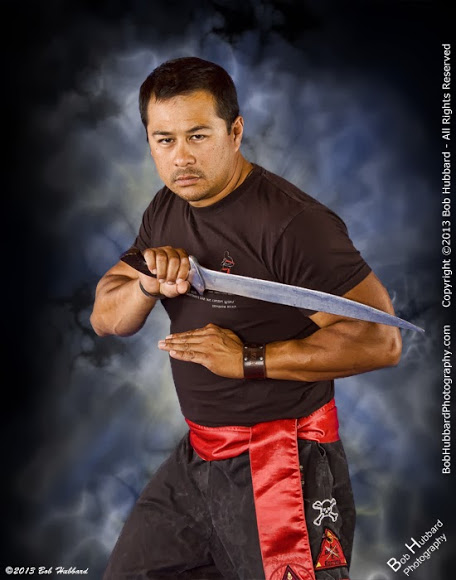
I am transforming, too. My martial arts journey spans almost 40 years now, with the most recent decade being anchored firmly in Southeast Asian martial arts - specifically Kali Majapahit.  I have gone from absolute beginner to teacher, learning all along from everyone and everything I could.  My quest is far from over, and as I have written before, I learn as much from my students as I have from my teachers.

I was initially attracted by Guro Fred Evrard's choice of terminology in the first KM class I ever took in an old shophouse on Yan Kit Road in Singapore.  He talked about "solutions" to "situations".  This blew my mind.  No teacher I had ever seen talked like that.  In the past it was about techniques and forms and repetition.  It was about patience and discipline and tradition and...waiting.  There was no creativity or innovation.  Systems were taught the way they had always been.  No one thought much about practicality or applicability - those things were for "sport" styles like MMA, Muay Thai or boxing, looked upon with disdain by traditional martial artists.  Guro Fred changed how I thought about martial arts.  He opened my mind to a new way of learning.  Thanks to him and my other KM brothers and sisters, my journey of evolution continues.

Over the years Guro Fred's emphasis has changed as he has evolved.  His focus has shifted, which is completely natural since people change over time, consciously and/or unconsciously.  While I look upon the old days fondly, I am always excited by his commitment to innovate the curriculum and find new ways to challenge us.  Nothing in KM stays the same for very long.  We continue to evolve and that keeps us fresh.

My approach has evolved too.  One of the most beautiful things about the FMA is the inherent ability to translate between sub-systems.  We start learning weapons (sticks) on Day 1 and we try very hard to link everything about the stick back to the empty hands movement and vice versa, using universal body mechanics/physics about centerline, weight transfer, hip rotation, extension.  We are reminded that our tradition comes from the blade, in KM specifically the barong, and we are encouraged to look at the stick and empty hand techniques through the lens of the blade movement.  Subtle changes are needed, but most of what we learn flows seamlessly from one to the other.  Our understanding expands to the world around us, whereby everything becomes a weapon proxy, including the environment.  As shown in many famous Hollywood films (Bourne series, Taken, etc.) trained kalista use anything and everything to win.

Now, when we see a technique, our minds begin to explore how the same concept can be reused and reapplied in a variety of other circumstances using any other tools.  One technique becomes hundreds of expressions and our creativity is unleashed.  This way of learning sharpens the mind.

We evolve our thinking from discrete technique to flexible solution.  Later we move beyond physical technique into aspiration, where our training is focused on making us better people - leveraging our strategy and psychology to negate the need for violent conflict.  Our journey moves from the physical to the mental/emotional and ultimately to the spiritual.  Our journey connects us deeply to everything and everyone and we manifest this awareness in every day of our life.

My arts at work and at home are no different from my arts at the dojo.  My life in KM has allowed me to evolve not just as a martial artist but as a husband, a father, a co-worker and a friend.  The evolution has brought me unparalleled happiness by keeping me connected.  I use what I have learned every single day and always will.

What is YOUR revolution?
How are YOU evolving?

Monday, February 12, 2018

Teachers and Students


I am very fortunate to have had several incredible teachers during my journey, starting officially from age 14 until now.  They taught me not only martial arts techniques, but so much about the world and my place in it.  I can honestly say that without my teachers I could never have achieved the things I have done or become who I have become - a teacher now focused on sharing what I have learned with the next generations.

My teachers have always appeared just when I needed them to.  Whenever I felt a plateau on the path or began to lose my way, a teacher would always be there to bring me back and keep me moving forward.  Sometimes it felt like inches at a time, but forward nonetheless.

However, if I am honest, I learned just as much from my training partners.  Together we explored every technique making countless mistakes along the way.  We found out what worked and what didn't and the trust in each other kept us from injury.  They, too, were my teachers.

Now I find that I learn so much from my students.  They come to class with bright eyes and focus, eager for each new bit of knowledge.  Their questions and the way they move teaches me a lot about how people understand our art.  Among our black belts we take some things for granted - newer students do not.  They don't assume something works (or that it doesn't).  I am fascinated by how to make the art easier for them to absorb.  In many ways, they are now my teachers.

Punong Guro Fred Evrard and Guro Lila Evrard have been among the most important of my teachers.  Starting me on my current path and selflessly sharing their lifetime of experience in arts I had never seen before.  They changed my mind about so many things, and I am forever grateful. 

At the same time, Guro Fred was always clear that he was not the art.  The art is the art.  What does it mean??

Make no mistake, I started Kali Majapahit because of them.  I continued (and still do) because of everyone else, the other teachers and students and the broader KM global community we have built together.  I don't get to see them as often as I would like, and certainly not as often as I did when we were all in Singapore.  However, that does not mean that I don't still learn from them.  It means that at my level I must focus more on adding to the art by incorporating my own background and experience (25+ years of traditional Japanese arts) into KM.  That is our KM Japan "flavor".

My students will outgrow me.  That's what I want.  Then they will take the art even further.  That's also what I want.  To do this, the students cannot sit back passively and wait to be "spoon fed" the knowledge by me.  They must become proactive and seek out understanding on their own so they can discover THEIR Kali Majapahit.  It is THEIR journey after all.

For the past 8 years I have tried to be at every class.  However, try as I may I can't always be there.  This shouldn't matter.  I am not the art.  The art is the art.
Come to class regularly and learn from each other.  You will be glad you did.

That is all. 


Wednesday, January 17, 2018

Just Like Walking


(note - the above photo is not me).  Although it could have been.  In fact, it could have been any of us.  Barring disability, usually in the first year or two, we learn to walk.  It's a trial-and-error process that is fraught with initial failure.  We stand, we wobble, we fall, we cry.  We get up and try again.  Eventually, we make it.  It's not easy and inconsistent at the beginning.  It hurts and is frustrating.  Still, we persevere and, having done so, experience a new world of possibilities that come from no longer crawling but from standing and walking upright.  We are faster and can now use our hands at the same time to reach something higher than we could on all fours.  We experience a completely new vantage point where things look different than before.

I can't think of any baby, barring disability, that does not ultimately figure out how to stand and walk.  That said, every baby struggles and falls for awhile at the beginning.  Every baby experiences the frustration associated with being unable to do something the first time you try.  Babies cry but they don't give up.  At the beginning they rely on help from adults but they are also striving for independence. Babies don’t decide “ walking is too hard. I think I’ll just stay down here...”

Our training is often like this.  There are setbacks and frustrations at the beginning.  Often, it feels like the body will not obey the mind.  The hands and feet just don't go where we want them to.  Intellectually we understand the movement and principle but we have trouble doing it.  We are inconsistent and our performance varies with each rep.  Sometimes, people give up on martial arts training because they "just can't get it" or "it's not for me".  Luckily, babies don't have the same ego, and they intuitively know that walking is worth the struggle.

Eventually, walking becomes second nature for people.  Given enough practice, so does almost anything else.  I am always amazed by the incredible things human beings can do through practice - not just physical things but mental and emotional things.  I am amazed that through practice and habit people can overcome nearly any obstacle - many disabled people learn to walk and run as well as anyone else.

In Zen Buddhism we often refer to a "Beginner's Mind" or "Children's Mind" and infer the sense of curiosity and wonder at the everyday beauty of our life.  To me this Beginner's Mind also means letting go of the ego associated with failure so that we can invest the practice needed to acquire, and ultimately master, new skills.  As far as we can tell, babies don't feel shame that they can only crawl when other toddlers can walk.  Instead, they focus on imitation and practice until they, too, are up and moving.

Whatever you want to do, the first steps will be tough, but don't give up.
You will get there.  I promise.  When you do, it will be worth it.

Keep Walking.

Wednesday, January 10, 2018

What We Are About

This is Sarah Silverman.  If you don't know her, she's a comedienne, actress, producer and writer who used to work on Saturday Night Live before making her own shows for Comedy Central.

I was reading her exchange with a Twitter poster and it really resonated with me, since a conversation last night with a close friend covered some of the same ground.

TLDR?
In summary, a guy posted a single word on her Twitter feed, "C@nt".  He seemed to be trolling for a response.  Instead of just reacting with vitriol of her own, she did a bit of digging and responded with compassion and concern for his situation, the motivations for why he would post like that.  She uncovered his history of childhood abuse, his painful medical problems, and his anger at not being able to do more.  His comments were a self-destructive cry for help.

The result?  A deeper connection with this new fan, and some outside help that may get him the support he needs to turn his life around.  It's a beautiful story, sorely needed in this modern world where all too often people react with contempt for each other.

We need more love and compassion.  We need more empathy and kindness.  We need to learn to let go of fear.

My conversation with my friend last night was about what I called "The Fear Equation".  Very often, people react from fear.  Fear causes us to lash out in a classic "fight or flight" response.  This fear reaction often causes the situation to escalate further.  This sometimes becomes the catalyst that triggers a violent encounter --- words are exchanged, physical space is violated (finger pointing/shoving), punches are thrown, police and ambulance are called...the damage is done.

I use the term "equation" because there are two sides involved.  When someone engages us with a fear-based action (verbal or physical), we respond in kind (or worse).  This ladder effect goads each side to continue to up the ante until something bad happens.  It can occur between strangers, but often happens with our partners and family members as well.  We say or do unintended things, which cause harm that may have lasting negative consequences.  In many cases this can and should be avoided.

The first step to breaking out of this cycle is to recognize that we own our responses to what other people say and do.  We can choose.  Rather than just instinctively striking back, we can choose to let go of our fear and ego and try to connect instead.  We can try to turn a negative situation into a positive one.  People have emotional power over us only when we give it to them. If undeserved, we can take that power back and no longer be subject to their judgments or emotional manipulation.  We don't automatically have to fight fire with fire.

It is important to consider interactions from the standpoint of our own fear response and how it is an integral part of the Fear Equation, adding negative energy and fueling the fear of others.  This is a bomb we can choose to defuse instead of trigger.

Martial Arts training is also about building self-confidence and self-esteem.  As we grow, we are less likely to be afraid of the words and actions of others.  This minimizes the need to react from fear and hopefully frees us to respond with empathy and compassion.  With support from our peers we can train to recognize and explore our fears - understanding them so we can finally let them go and be free.  This is what I really want.

Let's try to make 2018 "The Year of Empathy".  This world needs it.  WE need it.

Thank you, Sarah.  You are beautiful.

Sunday, December 31, 2017

Looking Toward 2018


Webster's Dictionary defines "resolution" as being "a formal expression of opinion or intention..." but also "a decision or determination (to do something)".  It is well-known that most New Year's Resolutions fail.  US News and World Report famously wrote that 80% fail by the second week of February.  Those are bleak odds indeed.
There are lots of suspected reasons why, but for most of us a combination of factors is to blame.

One popular method for goal-setting is to use the SMART acronym.  That is, 
Specific, Measurable, Attainable, Realistic, Timely.  My previous employer, Salesforce.com, was very focused on a process called V2MOM, namely Vision, Values, Methods, Obstacles, Measurements.  This is a great way to ensure that your goals (vision) are aligned to your personal beliefs (values) and tied to specific actions (methods).  It also challenged us to consider what problems we could foresee (obstacles) and how we would numerically quantify our success (measurements).  This practice was followed from the CEO all the way down to each new graduate and is deeply embedded in the company cultural values.

Martial Arts is a great way to help build a track record of achievement for yourself.  We set regular goals and work together to achieve them, demonstrating our progress through the cycle testing every 3 months.  We are very fortunate in Kali Majapahit that Guro Fred Evrard's curriculum is well-defined and specific about the skills mastery of each level from white belt through several levels of black belt instructorship.  There is always something new to learn.  What we can learn in the dojo we can apply everywhere.  If we teach ourselves good habits like coming to class regularly and on-time, training hard, giving 100% and being focused on our outcomes we will progress.  Together.  I have seen this time and again with students I knew as white belts who are now capable, confident instructors.

As for me, 2017 was a year of tremendous change.  I bore it the best I could and I am closing the year with a lot of bumps and bruises (mind, body and soul).  But I am still standing, and that's what matters.  I am filled with gratitude for this wonderful life I have and my many friends and family in every circle to which I belong.  I am grateful for being able to do what I love, together with the people I respect.  I am truly blessed.  In 2018, no matter the challenges, I am hopeful it will be a better year and I will stay the course, step by step, with all of you.  Let's enjoy the journey.  Together.

So...let's bag this one and awaken tomorrow to New Possibilities for Us All...

LOVE, JOY, PEACE,

John

"Imagine where you will be and it will be so...Brothers, what we do in life...echoes in eternity."   --- Maximus Decimus Meridus  (Gladiator)  

Monday, December 25, 2017

Deep and Wide


I just finished reading "The Subtle Art of Not Giving a F@ck" by Mark Manson.  Highly recommended as a great series of practical tips for focusing on what matters most to you (and learning to let go of the rest).  Something in the book really resonated with me - it reminded me of a powerful conversation on the stunning beach in Pranburi, Thailand at the Peaceful Warrior Camp last year.

Guro Claes Johansson of KDM, a super martial artist and a super person,  was telling us to "go deep" in our training, sharing insights he has gained from decades of training with some of the world`s finest martial artists.  He advised us to wring every drop of understanding from every single technique we experience.  He advised us, very rightfully, to take plenty of time to dissect each technique and study it from every possible point of view, considering the origin and context of the elements, including the cultural and social influences as well as just the physiological aspects.  During the camp we explored in great detail the fundamental movements and where they came from, slowly working up to combinations and variations.  We built a strong understanding that we could continue to explore for years to come.  I am looking forward to sharing this research and going even deeper at the 2018 camp.

Often, too often, we are in a hurry to see and try as many techniques from as many styles and systems as possible.  With barely the briefest of explanations we dive right in, tails wagging, and try to do whatever we can - eager to quickly move on to the next and the next and so on.  We don`t invest the time needed to truly understand what we see and experience.  As a result, we fail to translate the concepts to other movements we know, which as FMA practitioners should be automatic.  Our attention span is short, and growing shorter, and we sometimes lack the patience to really OWN a technique and commit it to memory.

Mark Manson argues that "more is not always better", reminding us of the paradox of choice.  Too many choices bombard us with doubt and indecision, creating a type of "analysis paralysis" that makes every choice seem wrong.  Faced with an overwhelming amount of options, we end up being unable to choose any of them.  It is very much like staring at a comprehensive food menu and being unable to decide even a soup or salad or beverage.  Time passes while the waiter stands by impatiently... Suffice to say, there is value in simplicity.

Some students are wide in their training, too.  They have spent 6 months or a year in a handful of different martial arts, never really committing to a path or settling into a long-term training regimen in any of them.  This "Jack of all trades; master of none" approach ultimately robs the student of achieving a deep frame of reference by which to compare and contrast.  They end up learning a handful of techniques, but never developing any solid foundation as a martial artist.  This is not a recipe for developing mastery.  Youtube, while giving us access to seemingly limitless global content,  provides only a very superficial glimpse of the techniques, and generally without the context for correct application.  Youtube is a great tool, but I suggest using it carefully.

Wide is good, sure, but deep is better.  Go Deep.


Monday, December 18, 2017

You'll Never Move Like Me

See Guro Fred's Amazing Karenza.  Every time I watch him I feel excited. I feel...jealous.  I want to move like that.

One day after watching his solo training / shadowboxing, Guro Fred noticed I was following his movements intently.  He told me "You'll never move like me."
My heart sank.  He was right.  After a lifetime of martial arts training, a Kung Fu World Championship, a stint in the French Paratroopers, a cupboard full of black belts and instructor certificates in just about everything, and so on and so on.
OF COURSE I WOULD NEVER MOVE LIKE HIM...I gave a deep sigh...

That's when Guro Fred smiled and said "you'll move like YOU".

Mind. blown.

Each of us are different.  Not only physically.  Some of us are taller/more flexible/stronger than others.  Some of us are visually impaired or even missing a limb.  Some of us have long-lasting injuries we are recovering from that may limit what we can do at a given time.  In some arts this is a barrier to progression.  As it is said in Kenjutsu "there are no left handed swordsmen".  Meaning that no matter what, we always train right-handed with the katana (the truth is, many schools have a left-handed draws and techniques for the katana as well...shhhh...don't tell them I told you...).  Officially anyway, everything is right-handed.

In Filipino Martial Arts, "handedness" almost does not exist at all.  We spend time from Day 1 working with both hands including double sticks as well as espada y daga and various other combinations.  In our empty hand flow we often have both hands doing different movements simultaneously (and sometimes our feet, too).  In boxing/kickboxing we are comfortable to fight in either orthodox or southpaw stance with no handicap.

Beyond this, however, our flow is OUR OWN.  It is not just about who we are physically.  It's as much about who we are emotionally, spiritually, ethically.  We move with differences because our intentions in each encounter are different from each other.  Two people rarely react exactly the same way to anything - fighting is of course the same.

As a student, the goal is to master the vocabulary of the art - sounds leading to words leading to phrases leading to sentences leading to paragraphs.  In the beginning there are patterns and expressions, but the goal must always be to express yourself in your Kali.

As a teacher, we are guides on this learning journey with the mission of enabling students to explore and find their own unique Kali "voice".

This is materially different from the ideas behind many traditional styles and, to be honest, I love it.  It's a major reason why Kali will be with me for the rest of my life.  It's who I am.

So don't worry about the person next to you.

Move Like YOU.

Monday, December 04, 2017

Home Improvements

This is my sword rack.  There are others like it but this one is mine.

It sits on my bookshelf just opposite the door of my home office (aka "man cave").  To many, it would seem like just an ordinary piece of furniture, although I doubt you can find one at IKEA (not even here in Japan).  The two drawers are functional and meant to hold items like sword-cleaning kits, obi and the like.  The pulls are little lions with sparkling stones for eyes.

In fact, this sword rack is very special, and extremely important to me.  I think, apart from my wedding ring it might be the most sentimental thing I own (followed very closely by my KM Barong, shown in the lower slot of the rack).

I got this sword rack as a Christmas present from a fellow student at the time, Mark Tome, back in 1985 or so.  Mark studied Ninjitsu with me in suburban Chicago.  He was everything I was not - tall, lithe, limber and quiet.  He had a background in Taekwondo and naturally took to the kicking elements of our art, just as he naturally felt at ease with the sword, almost like he had been born to it.
Other students came and went, but Mark was a constant part of our small inner circle at the school, rising steadily through the ranks.

Mark lived on the far south side of Chicago, near the Indiana border.  Many nights he would drive out to the West suburbs to pick me up so we could go to class together, dropping me off after before heading back home.  Long drives in his little car with no heater or air conditioning, with a lot of time to discuss Life, martial arts, and all our other hopes and dreams.

Mark learned woodworking from his father, and had great talent in other crafts as well.  One year he made these for each of us, some stained or varnished in brown, some in black lacquer and mine, the only one in blonde.  We were all simply stunned that he could make not just one of these beautiful pieces - but one for each of us.

For many years it was always directly at the head of my bed wherever I was, Daisho on it with handles in easy reach.  The third slot usually held a Jo.  When I left the US for Japan permanently in 1993 the stand was the only piece of furniture I kept.  I sold or donated everything else.

This stand has been with me from Chicago to Des Moines; to Osaka, Kyoto, Tokyo, Singapore, and now here in Yokohama.  For the past 30+ years it has gone with me through all my adventures, a constant companion and reminder of those training sessions in Chicago when we were all younger and I dreamed of what a life in Japan might be like.

I wonder where the other stands are and what happened to them.
Have they had adventures like mine?

Mark, if you're out there, I want you to know that your gift has never been forgotten.  It may have been ordinary to you, but it has always been precious to me.

Saturday, December 02, 2017

Chronicles

It started in 2005 with a question.
 
We were training in Yoshinkan Aikido from 5:45 AM at the Roppongi dojo.  Chris and I had asked Mike, a former Senshusei participant and instructor at Yoshinkan Honbu Dojo, for a semi-private lesson.  He agreed to teach us, albeit with a few conditions:  1) class was from 5:45 - 6:45 AM on Mondays/Wednesdays/Fridays.  note: the "regular" class was from from 7:00 - 8:00 AM and sometimes we ended up joining that one after as well.  2) No debate, no discussion. We do as instructed 3) we learned "the old way". Hard. No shortcuts, no complaints. 

Fine by us (or so we thought until we actually had to do it) .
Those were VERY EARLY MORNINGS, but filled with energy and good training.
I miss it.

One of the regular participants from 7:00 was a timid, shy Japanese girl, Saori.  She wondered why, arriving so early, we were already there and training.  She asked if she could join.  We told her the same conditions would apply.  She accepted.  I saw her test for 3rd degree black belt a few years ago --- well done Saori-sensei!  She may be many things, but timid and shy are no longer among them.  She is powerful, confident and a great martial artist.

But I digress... questions were asked during class.  Some of these were fundamental questions about the aikido principles and theory that are not easily answered without interrupting the training for lengthy discussion.  In our class we drilled.  Hard.  Constantly.  There was no time for lecture. Given my background in both Aikikai (1987 - 1989) and Takeda-Ryu Aikijujitsu (1995 - 1998)  I was by no means an expert in Yoshinkan, but with many years  combined of traditional Japanese martial arts including Iaijutsu, Kenjutsu, Ninjutsu as well as aforementioned aiki styles I was confident I could answer some basic questions about the principles and objectives - just not during class.

VOILA - this blog was born.

12 years later I have almost 450 posts and have had more than 72,000 page views.  My training focus has changed, but my blog remains the chronicle of my journey.  In it I have tried to detail what was important to me along the way, drawing inspiration from teachers, students, peers, friends and current events.
All of this through the lens of a martial artist.

It would be a lie to say I am not proud of it -  my blog represents everything of value I could document in which I have tried to tackle timely, relevant questions and observations from the past 12 years of my journey.  I started writing it for others, but ultimately I have written it really for myself - focused on the topics I wanted to cover.   I hope others have gotten value from it as well.

I strongly encourage every student to write their own martial arts blog.
It is a great way to document your reflections, learning, questions and growth through your journey.  It is a great way to push yourself to see the world through your "martial eyes" and find inspiration from every day happenings.  I often find myself reading old posts and remembering the training that inspired them, reflecting on my understanding at the time.  Have my opinions changed?  Of course they do, but it is interesting to be reminded of what I thought at the time.

The blog can be a great place to record your thoughts, post videos, write questions and comments and generally stay engaged with your training.  Mine has become a kind of "life work" and a treasure beyond my expectations.

Thank you for reading it.
 

Tuesday, November 21, 2017

Carenza - The Dance Of Life and Death


note --- above is Manong Cody Chilson of FCS, who visited Japan last year with Tuhon Ray Dionaldo.

Carenza - or blade dancing - is an important part of the Filipino Martial Arts.  It is often called "The Dance of Death", but can be a great way to improve our daily lives as well.

1) History and Culture
Carenza (also Karenza, Carrenza, etc) has its roots deep in the warrior movements practiced across the Philippines.  Until very recently, specific techniques were rarely written down and, unlike traditional Japanese/Chinese/Okinawan/Korean martial arts, kata (forms) have been eschewed in favor of drilling and sparring.  As well, since martial arts were forbidden under colonial rule of the Spanish, many training concepts were embedded/hidden in traditional Filipino dancing (Sayaw), just as they are in Indonesian/Malay traditional dances, Thai dances, Vietnamese dances and are even found across the globe in arts like Capoeira's Ginga. Even the well-known Tinikling, of bamboo dance, has important uses as part of training footwork patterns for fighting (note the high-stepping replacement footwork in the video).  Carenza is usually done to music and as a general rule they are unscripted, just like shadow boxing. 

There are also suggestions that Carenza was used before battle (tribal fights or individual duels), similar to the Maori Hakka, as a way of intimidating the enemy with a show of physical and martial prowess designed to strike fear into enemy ranks and bolster the defenders' courage.  These pre-fight displays are common in the animal kingdom as ways of establishing and maintaining social hierarchy and found in human culture across civilizations.

2) Training Uses and Benefits
Carenza is also often considered a form of FMA "Shadowboxing", and as such has many of the same benefits as western shadowboxing.  Namely, it improves the look and feel of our flows by adding to our fluency of motion, helping us chain together various movements in order to become smooth and connected.  I consider 3 levels of training/visualization in Carenza.  Also, akin to skipping rope, good Carenza provides cardio and, when using heavier sticks, strength training for the arms and core.  Inclusion of abanico/witik movements helps increase the range of motion of the wrists and adds to their flexibility.  Carenza is often done with single stock, but can be practiced with any/every weapon or combination such as Espada / Espada Y Daga, tomahawk, karambit and so on.

Carenza is often done solo, but can be performed with a partner, where both show their flow dance-off style to see which person exhibits the best combination of technical mastery, physicality and intensity. 

A) Practicing Basic Movements/Chaining
At its simplest, Carenza is a way to work on basic striking angles and connect them together.  Starting with 6 basic angles, adding to 10 angles, and creating random combinations to connect the attacks.  Hits can be practiced in broken and full lines with varying tempos.  Wrist rolls and changing hands are important parts of the Carenza as well. Other add-ins can then be included such as redondo, abanico, dunga, doble, Amara.  Footwork patterns are added as well including male/female triangles, replacements, pivots and the like.  We start to change from high line to low line (one or both knees down), which works the legs and reminds us to stay coiled and low when we move.  We practice our elastico footwork 1-step and 2-step, exploring how to open and close distance between corto/medio/largo.  The live hand can simulate checking/passing/grabbing/striking as part of the flow. 

B) Application and Visualization
Intermediate to advanced Carenza includes not only continuous flowing, but also fighting application and visualization.  Now, rather than just swinging the stick,  we imagine the attacking angles and how to respond to them.  We think about ranges (largo, medio, corto) and about principles (passa/contradas) and about positioning (point up/down) and this begins to affect how our body and weapons move.  We start to visualize attacking patterns and our responses and chain them together in meaningful combinations, burning these responses into our muscle memory.  In two-player Carenza, the goal is to flow off of the opponent's movements, in effect "countering" how they move and vice versa.  This is intended to convey to the opponent that "anything you try to do I am ready and can counter you".

C) Intensity and Focus
Carenza is also a good way to practice intensity and focus.  Rather than just moving body and weapon together, we can work on the gaze and projection of our aggressive intent.  As I have mentioned in other posts, training ourselves to be bold and assertive is not only essential for survival in combat, but for success in other aspects of our lives as well.

3) Closing
Like all of our training, what we put in is basically what we get out.  How we move and flow with our weapons and our bodies is in direct correlation to the quality and amount of time we practice.  Carenza is a great way to build our skills and should not be ignored as a training method.


Thursday, November 16, 2017

The Slap

(thanks for the inspiration KJ)

Q: What did the five fingers say to the face?
A: SLAP!

Lately, as we explore the various expressions of Sinawali 6 using our empty hands - specifically outside, inside and split entries, the topic of different strikes comes up in class.  Is it better to hit using a closed fist or open hand?

Open hand hitting has a lot of advantages versus striking with a closed fist.
As I have suggested in my blog before, I think that using the open hand can be a very viable and effective self-defense option.  In fact, I think many martial artists do not fully appreciate the devastating power of this striking tool.

The "Iron Palm" Tradition
Various internal martial arts focus on the palm as a striking tool and involve specific training in breathing and conditioning together with chi kung to increase the striking power and effectiveness.  Notable practitioners of this "Iron Palm" training include Brian Gray. Body hardening is found in many martial arts dating back to Indian yoga traditions even older than Shao Lin Kung Fu, as well as Okinawan Karate's Sanchin, Silat's Tarikan Tenaga, Muay Thai conditioning and others.  Some employ lotions or creams to strengthen the body (dit da jow, etc.) and some FMA even use holy talismans or other animist/spiritual magics to toughen the body or avoid injury.  That said, good, strong slapping can be done by amost anyone without additional conditioning.

The Striking Surface
For me, open hand slapping is best done across the palm surface (NOT the fingers).  I do not advocate striking with the fingers themselves, since the knuckles can flex/bend and cause hyper extension injury to the striking hand.  Instead, I advocate hitting with the pad of the palm all the way down to the palm heel, where the hand joins the wrist.  This surface is padded and yields strong impact force on contact.  In karate, palm heel strikes are well-known as among the most devastating hits.  The slap presents a broad surface area which often hits with palm heel and palm pad at the same time to two different areas (mastoid process and ear canal, for example).  It is likewise easy to transition strikes from palm heel to tegatana (knife edge) which are also delivered with an open hand and are devastating in their own right.

Key Targets
Palm heel hits in karate are often done as an option to the straight punch, aimed vertically under the nose/chin or horizontally at the ear.  Contrary to urban myth, it does not seem possible to palm heel nose cartilage into the brain via the nasal canal, although Hollywood seems to love this one.

I suggest that the open hand slap works very well against the side of the head including the ear, the temple, the mastoid process/jawline or even the orbital cavity.  Palm strikes to other soft tissues like the neck or groin are also effective, especially when using the palm heel.  I also like the slap or palm on the low line, particularly to turn the knee or change the direction of the hip line as a setup for other hits.

Opinions are divided on the use of the slap or palm against the rest of the torso including liver/spleen, sternum, plexus and the like.  I have heard some masters describe dim mak strikes delivered with the palm strike to the chest and designed to stop the heart, much like using a defibrillator on someone NOT having a heart attack.

The closest realistic variant of this is usually delivered with the knife edge strike and known as the brachial stun, applied to the brachial nerve line/auricular nerve line between the neck and the shoulder.

Training and Practice
Like all techniques, good training is done in several different ways.  I like to explore options during class, looking for places where the technique can fit into my flow.  Separately it's good to practice striking with power and intent on the heavy bag or with the focus mitts.  Make sure to keep your arm in from of your body when hitting, in order to avoid possible damage to shoulder and chest.  Slaps can usually fit in anywhere a hook punch would be used.  Be creative.

See you at class.

Monday, November 06, 2017

Area 51

Well, that's it.  I'm 51 today.

It's been an amazing year, over far too fast.  As always, I've met a great bunch of people and tried my best to make a difference while I am here. 
This year was truly a year of changes.

It was great to see messages from people all over the world wishing me well today.  It is both humbling and gratifying to think our lives are so connected.  Thank you for thinking of me, even for a moment.

Personally, my health is good and I find it hard to believe that a year or two ago I could hardly walk due to osteoarthritis in both knees.  Now I feel better than ever.  Ultimately I tried a series of injections into my knees, which at the time didn't seem to be working.  However, over a few months things improved and now they both feel good as new - without surgery.

Our Kali Family continues to strengthen, with several students preparing for their Kadua Guro tests next year.  They continue to impress me with their knowledge and dedication, each of them bringing new perspectives to what we do.  We have had some new joiners as well who are diving in with passion and energy.  Most importantly, we are using what we learn to make our daily lives better - to become who we want to be, conquering our fears and uncertainty and freeing ourselves to face new challenges.  Since last year I got chances to train with a lot of incredible martial artists, including a great training week at Peaceful Warrior Camp 2017.  See you in Phuket in March 2018!!  I can't wait!!

Professionally, the year ends with hope.  I resigned from my job and now have some time to carefully consider next steps.  Faced with being marginalized, I chose a higher path and sought better opportunity elsewhere.  This is what I advise my students to do, and I am glad that I could overcome my inertia and worries and do the right thing - look for a place where my background and experience could be more fully utilized to help our customers.  A new chapter will start for me in 2018 and I am very excited.  Salesforce was a strong beginning, and I will always be grateful to my Ohana for their encouragement and support.

Overall, despite the obstacles, this has been the best year EVER! Onward and Upward!!

There will be family time and travels before the New Year, both of which are treasures for me.  I'm looking forward to what 2018 can be. 
I'm looking forward to sharing this journey with you.

Thank you for your constant support and encouragement.

Osu!! 

Inayan System of Eskrima

On Halloween weekend we were given a very special treat.

Together with our friends at Shin Kali, we hosted the first Japan visit by Suro Jason Inay, Grandmaster of the Inayan System of Eskrima.  It was an amazing two days jam-packed with training drills, history, application and more.  I can't wait for the next one.

Kali-Majapahit stickwork is strongly influenced by Inayan Eskrima, including drilling of Cabca, Sinawali and Serrada, and it was a great opportunity to learn directly from the source.

About Suro Jason
Suro Jason is the son of legendary Eskrima master Mike Inay who, together with GM Angel Cabales, is widely recognized as one of the founding fathers of FMA in America having jointly established the West Coast Eskrima Society (WES) in the 1970s together with Max Sarmiento.  During the Pinoy Diaspora, many Filipino immigrants settled in places like Hawaii, but California was also an extremely popular destination, particularly the Bay area and around Stockton.  Suro Jason grew up training in Eskrima with his father and other famous masters, affectionately called "Uncles" - a veritable who's-who of FMA royalty in America.  The Stockton Tradition is characterized by low, powerful stances explosive striking and blinding speed, now hardly found even in the Philippines. Students of this tradition are easily recognizable when they move.

Having become familiar with many prominent styles, his grounding is firmly in the Inayan family system, to which he has added additional structure and pedagogy.  Suro Jason spent many years as a professional bouncer and currently works as a fugitive retrieval investigator/agent.  Despite this pedigree, he is humble and genuine and brings a direct, no-frills practical approach to the family tradition.  ISE includes a variety of sub-systems, each designed to cope with a different set of fighting circumstances.  These include Dequerdas, Sinawali, Kadena De Mano, Espada Y Daga, Largo Mano and Serrada among others.  While we touched a bit on all of them, we spent a majority of the seminar training specifically in Inayan Serrada.

Serrada Sticks
Although Serrada can be done with almost any length of stick (some masters use sticks over 35"), it is typically shown using a shorter, heavier stick between 22-24" in length.  The stick is unique to the individual and should reach from the armpit against the torso along the arm to the base of the wrist.  This stick allows for superior mobility at the extreme close range where Serrada is considered most effective.  Longer sticks can be used if hip rotation, footwork and shoulder positioning is good.

Stance and Footwork
Serrada stances are low and grounded, weight onto the balls of the feet.  Older pictures of GM Cabales show his knees almost touching the ground. This improves the geometry of the blocking by lowering the center of gravity and "coils" the legs for explosive counters.  Serrada is a forward-moving style, ideally suited to dueling in close quarters and does not rely on backward or sideways steps to evade.  Rapid replacement footwork delivers the full body weight on impact and positions the hips and bodyline for optimal striking and defense.  Done properly, Serrada can receive full power strikes in rapid succession while keeping very close to the opponent.

Transitions
Much of Serrada is practiced with the single stick, however double stick, double dagger, espada y daga are all based on the same responses, as well as empty hands, flexible weapons and even the bankaw.  The cornerstone movements (3 responses to each of the 5 basic attacking angles) have universal application regardless of weapon type.

Training
Apart from the many and varied training drills that ISE uses, they are renowned for the "lock and block" method.  In this drill, the receiver stands his/her ground while the feeder attacks with a set of random attacks that the receiver must block or evade.  No counter attacks are allowed, and the drill increases intensity in accordance with the receiver's ability, pushing just past the comfort zone into a high stress, high intensity session.  At higher levels, the attacks are full speed, full power and completely unscripted.  The feeder also trains to find openings in the guard and touch points on the body or head.  All of us had a chance to experience this drill one-on-one with Suro Jason and it is a humbling experience.  Some may liken this to the flow sparring of Balintawak, however in my experience the speed and power of the attacks are very different.  Lock and Block develops not only timing and reflex, but also the unique ability of Serrada to get ahead of the attacking chain and reposition proactively for the next strike.  Even at the basic level this drill is done with both stick and empty hands variations.

Summary
It would be easy to label Suro Jason as simply "GM Mike Inay's son".  This would do a disservice to the more than 40 years of training and research he has done to take ISE even further than it was.  He brings unique, practical insights to his family art and delivers extremely dense information in every moment of the seminar.

Friends in the Los Gatos area, I am insanely jealous of your chance to train regularly with Suro Jason.  He is the real deal and a warm and considerate teacher fully dedicated to making his students better.

Find him. Meet him. Train with him.  Be grateful.

Further Info
http://www.inayan-eskrima.biz/
http://www.jasoninay.com/
https://www.youtube.com/user/InayanEskrimador

Wednesday, October 25, 2017

Two Little Words

Another long day...another long week...
A long, crowded commute to the office for another day filled with meetings - meetings with co-workers; meetings with customers; meetings with visitors from out of town; lunches; dinners; drinks.
A long commute home thinking about all the things I have to do the next day, the next week, the next quarter...

Many of us spend our time thinking about what we "have" to do and who we "have" to meet.  We fill our calendars and day planners with to-do lists of tasks and meetings that never seem to end.  We feel a loss of control and get lost in the ebb and flow of our lives, caught in a never-ending rat race. But are we??

What if I proposed that we change two little words?
We change "have" to into "get" to?  What happens??

"Have to" takes away our control.  It leaves us victimized by our circumstances, burdened by responsibilities we never chose to bear.  It makes other factors our oppressors.  "Get to" expresses our rights and privileges.  It allows us to feel empowered by choice.

Now, instead of all the people I HAVE to meet, I think about all the people I GET to meet.  People I am able to spend time with.  People who can benefit me in many different ways.  Co-workers I can build a relationship with, where we can trust each other to do the right thing for our customers and help each other when needed.  Relationships I can build which I may carry forward for many, many years.  I get to meet customers who can help me understand the right combination of products and services they need to succeed.  Customers who can help me hone my service mentality to razor sharpness.  Customers who push me to be better and deliver more value.  I get to meet managers and leaders of other departments who can help me learn more about our company and what we do, and how we can work together better.  I get to meet people who inspire me for new ideas and vision about the Art of the Possible.

Instead of all the tasks I HAVE to do, what about considering them as tasks I GET to do?  Tasks that will help me develop my knowledge and skills, tasks that will help me find opportunities to collaborate with others.  Tasks that will help me develop patience and perseverance (yes, sometimes that's the best outcome we can hope for).  Tasks that can help me uncover my weaknesses or explore and develop new strengths.  Tasks that show me I am needed by others in order for our common mission to succeed.  Tasks that remind me how good it feels to be a part of something worth doing.

Every meeting I join can teach me something.
Every person I meet can teach me something.

I need to avoid the traps of negativity, and stay focused on positive outcomes rather than complaining about how busy I am or how many people demand my time.

Maybe by just changing a word or two I can change my outlook and connect to my Gratitude Attitude.

Saturday, October 14, 2017

YOU ARE HERE

You are HERE, right where you belong.

It's easy to fall into the twin traps of victimization or unworthiness.  On one hand, many of us (myself included) have times where we think "why me?".  It's like the Universe itself is conspiring against us to destroy our carefully laid plans, rain on our parade, or keep us from getting what we think we deserve.

Likewise, when good things happen we find it hard to believe that something special could happen to "someone like us" as though we do not deserve to have positive outcomes or to achieve our goals since somehow, deep in our hearts, we do not consider ourselves "worthy" or "lucky".

The truth, neither good nor bad, is that we are always right where we are meant to be.  When good things happen, it is important not to attribute them to simple blind luck, but to consider (and more importantly, to acknowledge) the positive impact our efforts and the efforts our supporters have had on our achievements.  Failing to do so robs us of our recognition that effort matters, effort is directly linked to outcome, and that cooperation is of paramount importance in accomplishing the things we set out to do.  We are products of our hard work, and also of other peoples' work on our behalf.

The victimization/persecution side is far more difficult.  It is easy to start believing everything and everyone is "out to get us".  The truth is that as much as I am a product of my hard work and the support of others, I am also a result of overcoming the many challenges I have faced - some of which have not resulted the intended outcomes.  Without those experiences, I could not have developed confidence in my ability to achieve.  Neither could I have learned some of the most important lessons I have been taught, much of which came from careful study of what happened when I thought I failed.

I think we are consistently faced with challenges that offer us opportunity to excel.  In doing so, we can develop a platform of successful habits and skills that over time give us the flexibility to conquer the unknown and to do so confidently, secure that come what may, we can find a way (with help, of course).  In the tough times, instead of thinking "why me?" I try to ask myself "what am I meant to learn from this?" and focus myself on taking away something of value from every situation - especially the ones which ended badly for me.

I am grateful for my experiences, good and bad, which have brought me to this point almost 51 years later.  I'm still here - exactly where I am supposed to be.  I hope I still have a lot more life left in me, and with your guidance and support, I want to keep challenging myself to be better than before.

Come along.  A journey worth taking is worth taking TOGETHER.

Friday, October 06, 2017

Motivational Speaking

(thanks for the inspiration Grinder)

Today a good friend suggested I become a motivational speaker or a life coach.  My response?

"I am. We all are".

Not trying to be glib here (well, maybe just a little bit).  My point is a simple one.  Everyone, that's right EVERYONE, is in their own way a motivational speaker or life coach whether they realize it or not.  We are all made up of a set of experiences and insights that have made us who we are.  Sharing this has the power to help others.  It is truly one of the greatest gifts we have.  Awareness begins with understanding our innate ability to influence others. Awakening is our acceptance of this responsibility we have and using this knowledge to improve the lives of others.

Everyone has a perspective or experience of value, and we all have the capacity to improve one another's lives.  Of course, going to see Tony Robbins (pictured above) is a life changing experience.  He has used this same power to build a brand and achieve his definition of success - notably from having been a janitor and not even graduating college.  Those academic things don't matter as much as many people think they do.  What's important is knowing we have something we can share, clarifying that positive message, and then actually breaking through our fear in order to use our message to help other people.

We all need not be on stage inspiring millions like Tony does.  We have the power to help through a kind word or action at a bus stop or in line at the supermarket - anywhere, anytime.  As well, we have the power to grow from the experiences of others if we listen, truly listen, to what they are saying.  I have been motivated and coached by literally thousands of people over the course of my 50 year journey.  Many of them didn't even know they were doing so.  Some were on TV or via YouTube or other media.  Hearing about their journeys inspired my own.  Sharing my stories is one way I can give back for all I've received.  My journey is far from over and I remain fully committed to helping other people until my time here is done.

Certainly some people inspire us about what we don't want to do or become - this is no less valuable than the positive examples.  In fact, sometimes it is our commitment to not repeat the mistakes of others or learn from our own mistakes that drives us to the greatest changes and improvements.  Sometimes it is sharing our experiences that empowers us to rise above our circumstances with a much deeper perspective we can pass on.

Knowing that we all have this power within us - the power to motivate and coach others - is a great equalizer.  It causes me to try to treat everyone with dignity and respect, since I recognize that each person can be of benefit to my understanding.  In the end, all most of us really want is to be respected.  Giving respect, especially to those who may have lost it for themselves, is a key to connecting.  We discount the poor, the old, the sick, the homeless at our peril - their stories often have the most value and their lives often have the greatest examples of courage and strength.

Henry David Thoreau writes "The mass of men lead lives of quiet desperation."
To me, this is why we must do our very best to connect to each other - for their sake as much as our own.  By connecting, we share. By sharing, we grow. By growing, we achieve.  This cycle of virtue helps give our lives meaning and purpose, leaving us with a richer outcome at the end.

Especially now, governments are working hard to divide us - to keep us from sharing with other and acknowledging our common core.  Please join me in resisting these attempts to break society apart.  Embrace what makes us human --- Compassion.  Open your heart to listen.  Open your heart to share.
Motivate and be motivated. 
I promise you can make a difference to someone, just as they can for you.

Making a difference is why we are here, after all.   

Sunday, September 24, 2017

Big Fun Down Under

What a fantastic week.

Salesforce sent me to Melbourne, Australia for a week of training, and I was very lucky to get a chance to train with extended family at the Melbourne Budo Academy in Fitzroy, quite close to the CBD.

The Academy is run by Sensei Jon Marshall, a 6th dan in Yoshinkan Aikido and oriental medicine practitioner/teacher.  He is highly ranked in other styles as well and has been a martial artist since childhood.  The Academy teaches a variety of Japanese martial arts and there's something (many somethings) for everyone.
If you can go there, DO.  It a MUST destination in Melbourne.

In our brief 90 minutes session I chose to explore the links between Kali's empty hand movement (Kadena De Mano) and aikido, a topic I introduced at Peaceful Warrior Camp in Thailand earlier this year.  It is an area very dear to my heart since it is where I first began to connect my own Japanese martial arts lineage to Kali and build the basis for "my flow".

I was lucky to have a room full of very high-level aikidoka, and their deep commitment to what they do was immediately evident.  They move with power and conviction, and that is the hallmark of both great students and a great teacher.

We started with the basic pattern of hubud lubud, a common drill used in FMA to build hand speed and coordination. There are many, many versions of this drill. The one I showed is similar to the video in the link above (final elbow control using pak sao instead of c-grip as they do). In the FMA, this drill is done with a variety of empty hand attacks, with blades, sticks and just about anything else.  For simplicity we stayed on the right side.

From this framework, we drill to improve speed and smoothness until the flow is an endless cycle with an established timing and rhythm between the partners. Then, we can start to find openings and entries.  My use of this drill is based on the classic aikido drill 手の取り (te no tori or "taking hands") which is again closely related to Hakka/JKD's chi sao or "sticky hands".

Some of the flows we introduced included hijishime variations, Juji nage, ikkajo, ude garame, shiho nage, shomen iriminage.  While in Kali Majapahit we use hubud as a framework to explore a lot of different styles including not just Kali but also Silat and Hakka Kuntao, in this short seminar I wanted to really demonstrate the fact that this drill can include entries for many classical Yoshinkan techniques as well.

Since RYA closed over two years ago, it's been some time since I crossed hands with well-trained Yoshinkan artists. Here's what I found:

1) Big Movements, Big Power
We worked hubud lubud from Yokomen Uchi, a common aikido strike.  This kept us from having to explain FMA striking angles.  In Yoshinkan, this hit is a big one with a full step.  It comes in hard with all of shite's body weight behind it.  This is good flow practice for FMA people to experience passing that power from hand to hand in hubud.  Fighting is about finding the optimum balance between strength and speed so that we move quickly but also can contact with authority.

2) Squaring Up
In Hubud Lubud we tend to stand with our hips square to the opponent, which makes it easier to get all weapons (especially left side hand/knee/feet) quickly involved.  For us it is a corto (close range/CQB) drill.  In aikido, it is more common to turn and present the side of the body.  This certainly adds hip rotation, but sometimes at the expense of delivery speed.  Something to consider.

3) Everything is a Weapon
In FMA, we use nearly every part of the body.  Any striking surface can be leveraged to get a viable weapon onto the attacker as quickly as possible.  This includes elbows, knees, head, bicep, tricep, calf, shoulder and a host of others.  In aikido, the strikes are standardized to punches and sword hand (shuto) so there is some interesting study in how to use other body parts within the same techniques. In showing the classic FMA lever takedown, we did variations using both the hand and the leg to get the same result.  FMA "adds spices" throughout the techniques, and there is always a place for an elbow, knee, headbutt, forearm smash or other add-in to help uke remain compliant if needed.  Yoshinkan has powerful atemi as well, and I am a big advocate of their use.

4) On Playfulness
FMA are usually learned through two key steps - drills and playing.  In the drills we get the basics and see some examples.  In playing, we experience the technique from both sides and put it into a wide variety of situations to see how to adjust it for the many variables that exist in martial arts expression.  For us this is critical since fights can happen under a diverse set of circumstances, needing changes to distance, timing, power or footwork based on terrain, available weapons, number of opponents and so on.  The playing is where we own the technique and make it part of our natural movement.

5) Attacking the Structure
In my Kali (Guro Fred, my teacher, spends a lot of time on this as well) we are principally concerned with how to disrupt the structure of an attacker.  This means seeking control over the head/neck/spine at the earliest opportunity and using them to minimize an attacker's strength and balance.  For every aikido technique, there is a similar process of taking uke's balance.  It is important to study these points deeply and fully understand the objective of each technique in terms of learning about the human body and how to control it.  "We move from strength to strength, balance to balance and move our opponents in the opposite manner from weakness to weakness."

6) Explore and Discover
These were my magic words to the class, encouraging them to go deeper and find their own connections.  The martial arts world is rich and vast with plenty of opportunity to find fresh new ideas.  I also appreciate the consistency and dependability of Japanese martial arts training, but I like it best when balanced with a Beginner's Mind and fed plenty of new information to absorb and apply.

7) It's ALWAYS about the People
Such wonderful, friendly, people.  Although Sensei Jon and I had never actually met in person before, he was incredibly open, kind and accommodating.  His students are busy professionals, but also charming and kind.  They have built a lovely Budo community there and support each other's learning and growth.  The positive energy in the Academy permeates the space.  I felt warm and happy at all times.

Melbourne is a beautiful city with classical European architecture, great coffee, a love of outdoors/sport, and top-shelf martial arts.  It was a tremendous honor to be able to share my life's work with my family there.  We'll meet again for sure.

OSU!!

Monday, September 11, 2017

Change Before You Have To

As seen on a t-shirt in a random Tokyo store window.
This one really caught my attention.

Change is scary.  Change is hard.  Most of us hate to change.
We are truly creatures of habit, habits which can make or break us.

Habit is even the subject of one of my favorite poems:

Who Am I?
I am your constant companion.
I am your greatest helper or heaviest burden.
I will push you onward or drag you down to failure.
I am completely at your command.
Half the things you do you might just as well turn over to me, and I will be able to do them quickly, correctly.
I am easily managed - you must merely be firm with me. Show me exactly how you want something done, and after a few lessons I will do it automatically.
I am the servant of all great people; and alas, of all failures as well. Those who are failures, I have made failures.
I am not a machine, though I work with all the precision of a machine plus the intelligence of a human being.
You may run me for a profit or turn me for ruin - it makes no difference to me.
Take me, train me, be firm with me, and I will place the world at your feet.
Be easy with me and I will destroy you.
Who am I?

I AM HABIT.

I like the t-shirt quote because it strongly suggests that Change is inevitable, which I believe.  We cannot resist Change, at best we only delay it for a time.  Often we may be reluctant to change until the pain of change is less than the pain of not changing.Because of this I think it is far better to be proactive and initiate Change on our own terms before ending up in a situation where it is thrust upon us.

Accepting change and initiating it on our own also helps us remain comfortable with the concept that the world is in flux, and to be less surprised when even unexpected changes occur.  Complacency is truly the enemy or progress.  For relationships, too, complacency is often the beginning of the end, leading to situations where one partner or another (sometimes even both) feel taken for granted or underappreciated - often a prelude to breakup.

In business, it is the same.  In a very tearful interview post their acquisition by Microsoft, Nokia CEO stated "We didn't do anything wrong, but somehow we lost."
In retrospect, the world was changing and they chose to wait.  Kodak, among others, is a great example.  The death of 35mm film business did not catch them by surprise, but complacency and an unwillingness to embrace change led to the firm's rapid decline.

As a long-term veteran of the markets, I can also attest that whenever you are FORCED to take action, forced either to buy or sell, the price will never be as good for you as when you can choose your timing.  This applies not just to stocks and other financial instruments, but to cars, homes and any other assets as well.

In Martial Arts, not unexpectedly, it is the same.  Success can be summarized by denying choice of action to your opponent and keeping it for yourself.

Change is the only constant.

Sunday, August 27, 2017

I Choose You

(thanks for the inspiration KY)

Life is filled with choices.  Every day we have to choose from a variety of options.  It can be hard to choose, especially when the choice is between two options that both seem equally good or equally bad.  However, choices must be made for us to continue. Indecision is the enemy of progress.

In a perfect world, we would have full transparency and foresight, making the best possible decisions based on true and complete facts every time.  However, in reality it is rarely the case.  We make decisions based on emotion, with incomplete information or unreliable sources, and often experience regret not just from what we chose but from what we did not.

Most of the time, bad choices can be undone but sometimes it's not easy and sometimes undoing mistakes can be harder than just accepting a bad result.  It takes a lot of courage to admit you were wrong, and even more to actually do something about it.  Sometimes there is no reset button, although we all have times we wish there were.

I find the band aid principle works best.  If I know the band aid has to come off, I would rather get it over quickly than prolong the pain.  Waiting for things to get better, especially in abusive relationships, tends to empower to the abuser who rarely sees the need to change.  Often, these people are not even aware that what they do or say is considered abusive to their partner - they think they are just being open and honest.  However, strong relationships are supportive and encouraging, empowering both people to achieve more, not less.  As I get older, I become more convinced that fear is the biggest motivator in the lives of most of us. Fear of rejection, fear of failure, fear of what others will think, fear of letting go, fear of losing control, fear of not being loved (or loved enough), fear of being alone.  The list goes on and on.  Healthy relationships are powerful because they help us let go of fear.  This frees us to become happy, and positive relationships are a cornerstone of happiness for healthy people.

Relationships, like most things, involve choices.  In most modern cultures we choose who to date, who to become serious with, who to marry.  We choose partners not just for their physical appeal (I hope) but also for the strength of their character, their reliability and their commitment to a future together.  Despite the relatively high (and growing) instances of divorce worldwide, I don't think anyone ever gets married expecting to get divorced (except maybe in California).

It's hard to make a permanent commitment to someone when we cannot predict how they (or we) will change over time. What is absolutely certain is that there WILL be changes, both to our partners and to ourselves, and this is to be expected.  Personally, I don't believe we have much power (nor much right) to change others.  The best we can hope for is to change ourselves; to allow ourselves to be inspired by those around us, including our partners, and truly strive to become better people.  Hopefully our partners will do the same.  It is possible to lose our way, or for our partner to lose theirs.  This is why compassion, forgiveness and understanding are so important in healthy relationships.  People are complex and a lot can happen along the way.

Marriage certificate or not, couples make a deliberate choice to be together - or not - every single day.  I have found that the small kindnesses every day are the ones we build relationships on.  Holding hands, sharing what happened during the day, going for a walk, having a meal together.  The little everyday things that occur in between life's big events.  These are more treasured memories for me than big vacations to exotic places because  they show that my partner has given me the most important thing she has - her time and attention.

In my case, I try very hard not to argue over the mundane - where to eat dinner or what color tablecloth to buy.  I try not to argue about money or religion or politics - there is nothing to be gained there.  When we disagree I try not to make it personal nor to carry forward any grudge.  I am absolutely against any form of domestic abuse, verbal or otherwise, from either partner.  Those wounds go deep and sometimes don't heal at all.  Moreover, when children are involved abusive relationships establish a precedent that these behaviors are "normal" and influence them to repeat those behaviors in their own relationships.  Many abusive people I have met are simply acting out the scenarios they experienced growing up.

I think it is important not to take our partners for granted and remember every day that our time on Earth is short.  Treasure every moment and learn to let the little things go - in the end, they are all little things anyway.  The Gratitude Attitude wins every time.

I remind myself every day that, given the chance, I would choose my partner again, every time.  This helps me feel constantly grateful by realizing she has made the same decision in choosing me every day, and that I am profoundly lucky.
Relationships are not always easy, and I remain humbled that despite knowing me so well, my partner can accept me - many flaws and all.  I promise to do my best every day to remain worthy of her faith and trust.  I know I have to earn it every day.  Complacency is the enemy of love.  Be vigilant.

Choose.  and Be Chosen.

Saturday, August 26, 2017

LOVE THE GLOVE

(thanks for the inspiration KMJ Students!)

If you know me, you know:
@ I love teaching
@ I love KALI
@ I love Boxing (especially Filipino Boxing)

For the last 30-40 minutes of each 2-hour class we either box or do Panantukan (Filipino kickboxing).  It is one of my favorite parts of the class and one of the most important - why?

1) Cardio and Breathing
It's a great cardio activity.  There are gyms which just offer this kind of training, but you get a "mini-session" of it included for free in every KMJ class.  This is great for letting off some steam, developing focus, and burning up calories.  We sweat A LOT, and that's good.  We also focus on breathing, timing, distance, rhythm, all of which are very important inside and outside a fight.

2) Aggressiveness/Assertiveness Training
I have posted about this recently, and I am a strong believer that aggressiveness/assertiveness are key traits that we need to learn to be successful in life.  This does not mean to be violent to each other per se, but we need to be able to "flip the switch" and use our strong willpower and aggressiveness in a self-defense situation since this can mean the difference between walking away and being carried away.  The boxing session is a great way to develop this in a controlled, safe environment.  We can "let the lion out" as well as experiencing this from our partners, which helps us maintain composure when others display aggressiveness towards us.

3) Self-Defense Applications
I love aikido, too.  In fact a large number of posts on this blog is focused on it. That said, good boxing skills are hard to deny in a self-defense situation.  I will not concede the importance of strong low kicks, nor of good joint-locking and throwing (both part of our KM curriculum, too).  However, as a conditioned response, a strong punch is very effective as a default.  If your students do not develop strong punching skills, it is hard to say you are teaching them good self-defense basics.

In KM we fight from a southpaw stance, and this can take opponents by surprise since many trained fighters are used to opponents in orthodox stances.

In our drills, we have many times where the puncher is under pressure or being touched by the pad holder during the round.  This  is very important since in real fights you will be likely touched by your opponents and need to maintain your focus and composure to keep moving and fighting.  Untrained fighters may stop if they feel a hit, and that usually ends in disaster for them.

We need to be comfortable being hit and continuing to fight back.

4) Muscle Memory
They way we drill is highly efficient, meaning lots and lots of reps in a very concentrated period of time.  This helps build muscle memory especially for foundation power punch movements like the cross and hook.  Muscle memory matters in self-defense since we know that "we fight how we train".  For the pad holder, too, it is practice on distance, timing and rhythm, which are key attributes for any fighter.

We also get a lot of time to practice our guards and covers, which are critical responses in self-defense.  We work on our blocks, elbow covers and foundation movements like dodge/parry/bob and weave, which can be lifesavers when needed.  These should also be part of muscle memory.

Since we also hit the mitts full power, we teach ourselves to punch using the entire body.  Some martial artists have been training for years and have never hit anything full force (heavy bag, mitt, opponent).  Light contact kumite point fighters are often guilty of training to just "light touch" each other, which is the wrong muscle memory for self-defense applications.

I prefer that we be conditioned from the beginning to hit full power in order that when the time comes (hopefully never), we can hit with everything we've got without any feeling of discomfort or awkwardness.

I really hope you love the boxing at least as much as I do and agree its importance as part of our training regimen.

FINISH STRONG!